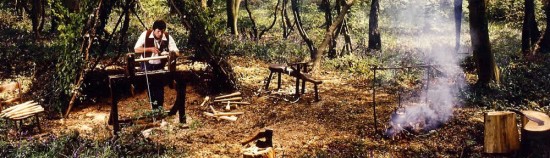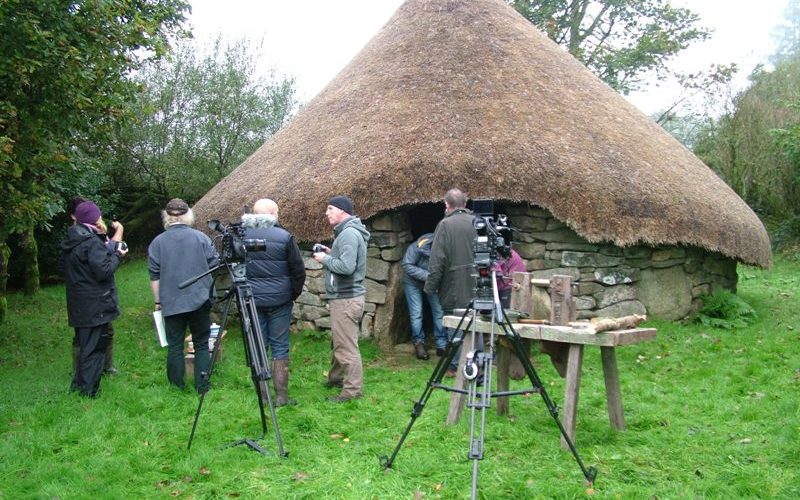
A Bronze Age burial chamber was discovered on Dartmoor, with the remains of a woman, and four lathe-turned ear studs. So began an archaeological experiment.
wood carving
Raymond Harvey makes his (wooden) bed
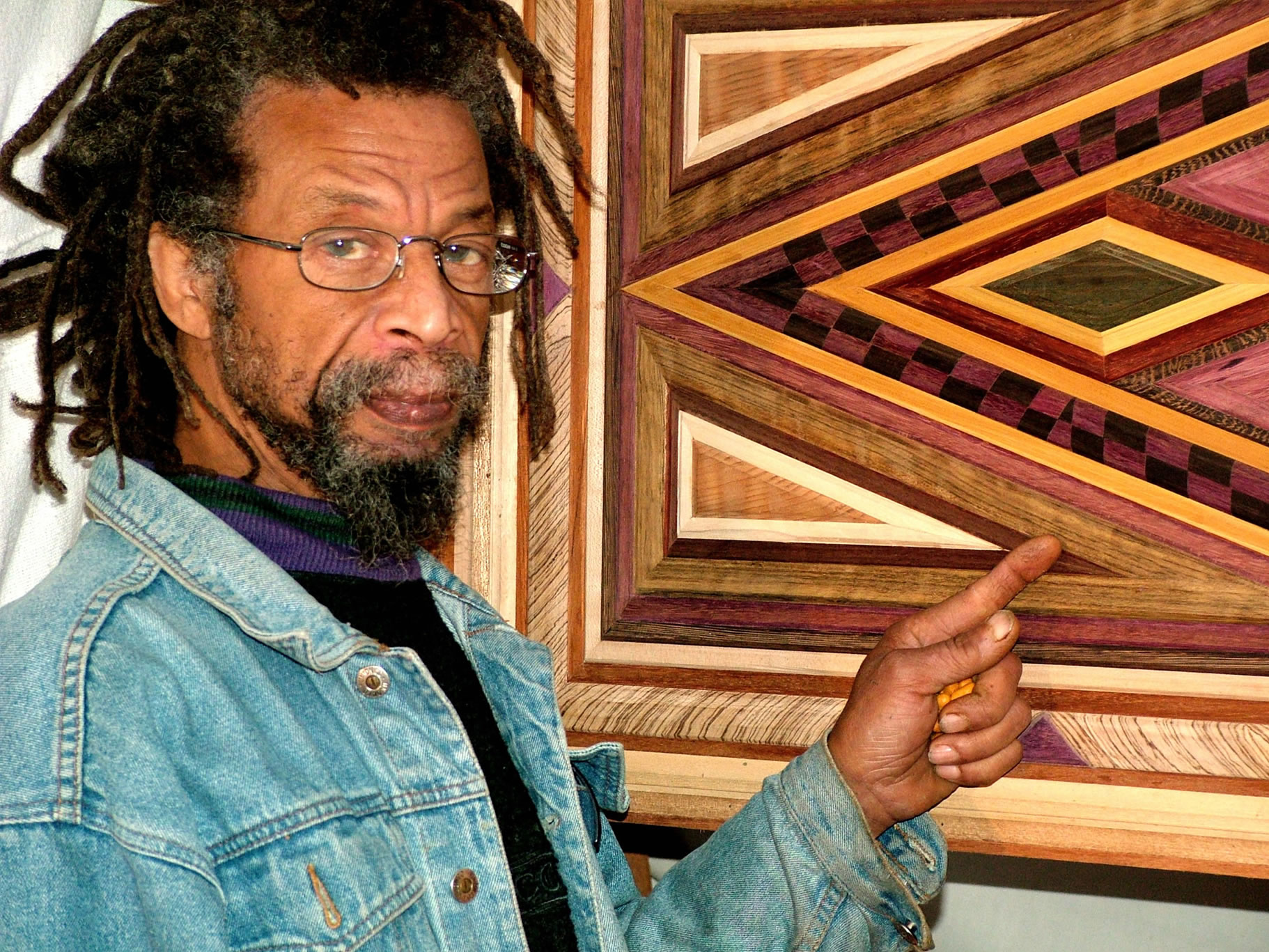
“These are my most important tools”, said my host, looking at two home made knives, one ground from a worn-out hacksaw blade, and an old ‘Surform’ rasp. I was standing in Raymond Harvey’s makeshift back-garden workshop, which reflects his general approach to his work, being a structure consisting completely of recycled materials. There, standing majestic in the […]
The Caversham Village Sign: carved by Stuart King
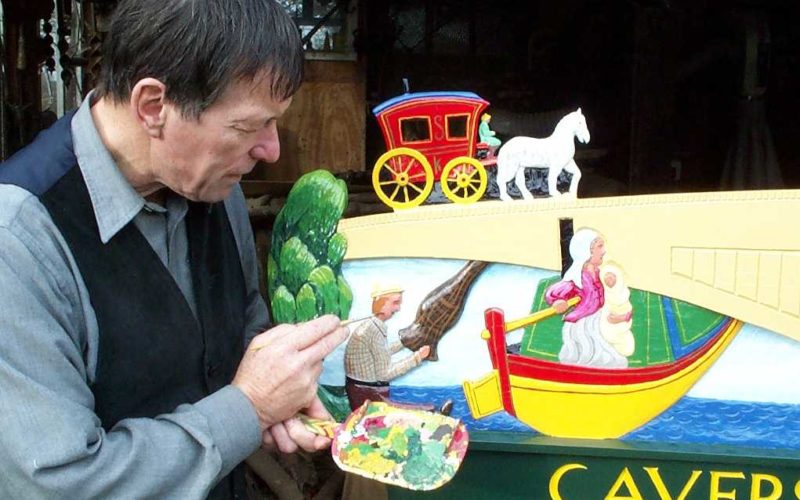
In some parts of England there is a tradition of carved wooden signs depicting the unique qualities of the area and often erected on the village green. Usually created by a local craftsman, they instill a sense of identity and pride, and are rivaled only by the English pub sign for originality. They are part […]
Making Gypsy Flowers

The most impressive gypsy flowers were created from wood, Elder being the Romanies’ preferred material. A short peg knife is the only tool required.