Stuart wins Strictly Woodturning

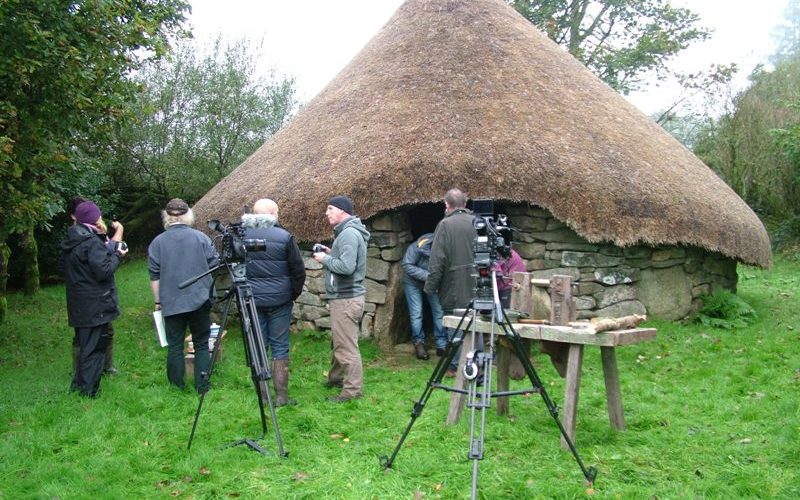
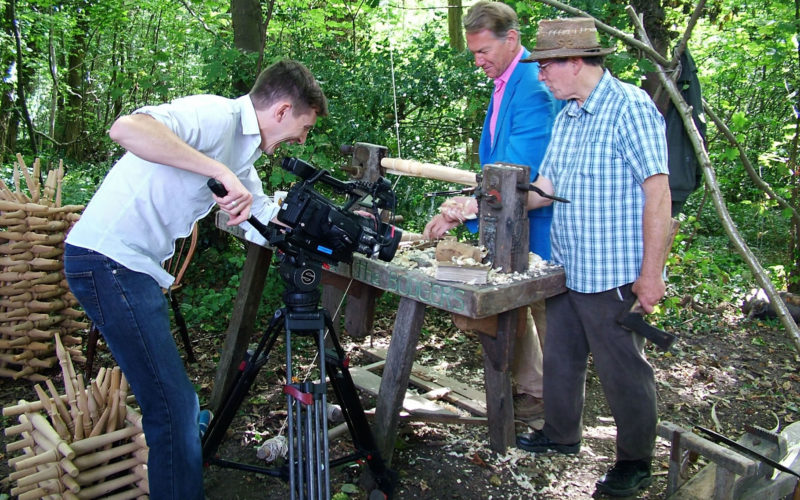
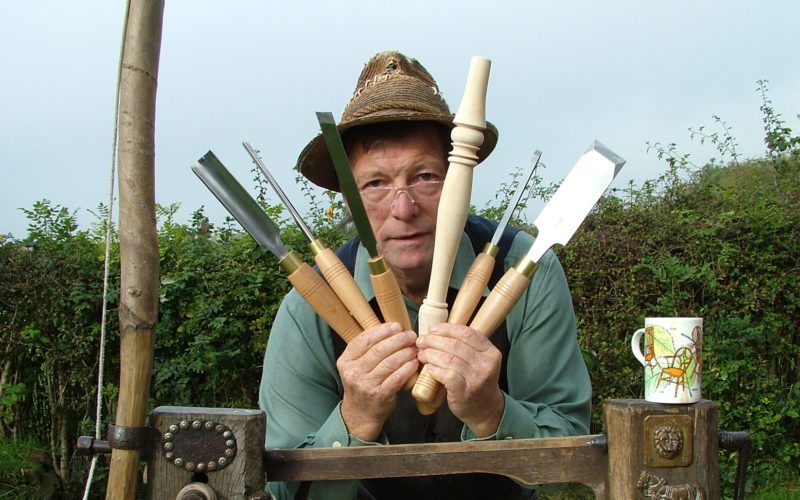
Strictly WoodturningOn the evening of Friday 23rd October 2009, attended by 170 guests, delegates and turners, Axminster Tool Centre hosted the Strictly Woodturning event.

Similar to the BBC’s popular Strictly Come Dancing, this was a competition in which the 12 turners competed against each other at the lathe.

They were tasked with creating items such as a vase, goblet and lidded box in an incredibly short eight minutes. Continue reading

History of Marquetry (with Glossary)

Marquetry

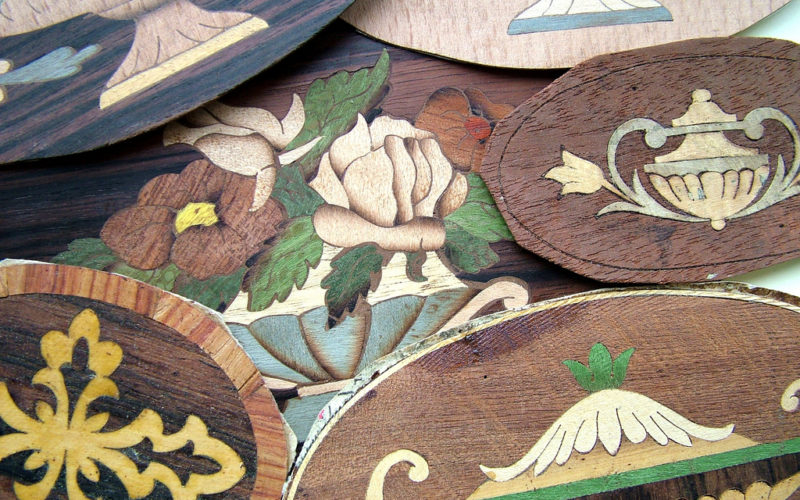
The earliest evidence that I am aware of for marquetry/inlay is a remarkable casket from the city or UR, in Mesopotamia dated c2600 BC. Much of the work is cut from ivory and set in bitumen and is a pictorial representation of a mixture of royal and daily life. Not until the European renaissance do we again encounter pictorial decoration using contrasting veneers in the form of intarsia. This inlay technique was originally centred in the Italian city of Sienna in the 11th century and much used to decorate church furniture and panels. Continue reading

History of the Lathe: part one – reciprocal motion

Chinese pedal latheAll lathes by their very nature rely on a revolving work piece. To capture and impart this motion, to devise and create the required force has challenged mans ingenuity back into pre-history. Man has been using the momentum provided by a spinning weight for tens of thousands of years in the form of drop spindles for spinning wool. The potter’s revolving ‘wheel was almost certainly the first machine used by our ancestors. It maybe that the reciprocating bow drill and pump drill in it’s many forms was the first mechanical hand tool, Certainly it could be used to create fire as well as bore holes and with a profiled cutter fitted could be used to produce buttons, counters and beads. Continue reading

History of the Lathe: part two – continuous rotation

French giant wheel latheThe wheel is probably man’s most important technological discovery.  A Sumarian pictogram dated 3500BC is the earliest reference for the wheel. By 2000BC man was making spoked wheels yet the earliest pictorial reference we have of a wheel driven lathe seems to be from the 15th century.

The great advantage of a wheel driven lathe is that continuous and controlled rotary motion is possible. This was not an automatic benefit to every aspect of woodturning though, as is illustrated by the continuing use of the reciprocating bow, strap and pole lathes. These ancient, simple lathes could still compete and perform efficiently in certain specialist areas such as small spindle and bowl turning. Continue reading

History of the Lathe: part three – mechanical power

Electric power drillFrom classical times man has harnessed wind and water to work heavy machinery, to relieve him of hard physical labour and to speed up production. A Roman settlement C.200AD in southern France boasted sixteen water mills for grinding corn. It may be that this form of motive power was used to drive lathes also but if it was there seems to be no record of the fact. If this were the case, it would have probably have been the exception rather than the rule.

It does appear that the woodturners of old were content to continue with their tried and trusty traditional methods long after other sources of power were available to many of them. There were good economical reasons for this. No advantage was to be gained by expensive investment when the simple reliable technology of the strap, bow, pole and latter wheel lathes was usually just as efficient and more reliable. Continue reading

History of the Lathe: part four – the machine takes over

Man has always tried to find ways of making manual tasks easier and the businessman methods to reduce manpower, speed production and lower operating costs. A good illustration of this was the manufacture of rifle butts. Hand held firearms have existed since the Middle Ages and virtually all these weapons incorporated a hand fashioned wooden butt. Making rifle butts was a highly skilled and time-consuming occupation and in time highly protective guilds were formed and prices kept at a high level.

This was just the sort of situation where a machine solution would be welcomed by firearm manufacturers, and in 1820, an Englishman, Thomas Blanchard designed a ‘reproducing lathe’. Blanchard’s lathe was capable of making two rifle butts an hour and it was not long before he had built one capable of producing ten or twelve in an hour. He went on to devise other reproducing lathes to manufacture shoe lasts and axe handles. Continue reading

Marquetry and Me

Stuart King at the marquetry cutter’s donkey

I left school in 1957 aged 15 years with notions of being an archaeologist or naturalist, or even a film cameraman, but with not one qualification to my name. My furniture-making farther said that I had no choice but to seek a job in the local furniture industry. There has been such an industry in my home town of High Wycombe (35 miles north of London) for over 200 years so it seemed perfectly natural, although not very exciting, to follow in my father’s footsteps. Continue reading

Raymond Harvey makes his (wooden) bed

Raymond Harvey, woodturner from High Wycombe

Raymond Harvey, woodworker from High Wycombe

“These are my most important tools”, said my host, looking at two home made knives, one ground from a worn-out hacksaw blade, and an old ‘Surform’ rasp. I was standing in Raymond Harvey’s makeshift back-garden workshop, which reflects his general approach to his work, being a structure consisting completely of recycled materials. There, standing majestic in the midst of this ramshackle shelter is the most stunning four poster bed I have ever seen.

It is bedecked, one could say almost bejewelled, with the most beautifully coloured and grained exotic woods, all vying for attention. These are arranged in very precise geometric patterns reminiscent of the Islamic art of the Moors. Continue reading

Bone up on Bobbins : the craft of lace bobbin making

Lace maker

‘Yon cottager, who weaves at her own door,
Pillow and bobbins all her little store;
Content though mean, and cheerful if not gay,
Shuffling her threads about the livelong day,
Just earns a scanty pittance, and at night
Lies down secure, her heart and pocket light.’

Lines written by the poet William Cowper (1733-1800) describing the plight of lace makers in his hometown of Olney, north Buckinghamshire. For the most part lacemaking was an occupation of the poor, mainly women and children, and although the financial rewards were low it often made the difference between independence or the workhouse. Continue reading

Khokhloma Ware: Folk art for the masses

Kohkhloma painted ladleVirtually no visitor returns from Russia without a painted wooden souvenir reflecting the traditional ‘Khokhloma’ folk art. Khokhloma ware has a very long tradition and can be traced back to both the monastic and peasant culture of the seventeenth century. The predominant materiel used in making these various decorated containers and tableware is Birch, Lime and Maple. Continue reading

Samuel Rockall: last of the chair bodgers

The two RockallsThe proud brick quoined flint cottage still stands alone on Summer Heath, once home to the Rockall family for an uninterrupted 180 years. But no longer can freshly cut Beech butts be seen stacked in the shade of a tall hedge or the whinny of Dapple, the family cart horse be heard from the meadow.

A traditional Chiltern Hills way of life ceased when Sam Rockall died aged 84 in 1962. The local newspapers announced: Samuel Rockall, the last of the Bodgers is dead. Continue reading

The International Turning Exchange

Stuart King at the International Turning Conference

There is nothing parochial about the International Turning Exchange (ITE); this is born out by the number of residents who have participated from many parts of the globe over the last ten years. For me an indicator of the programme’s great success was the number of past residents who chose to return to Philadelphia to repeat the experience. I see the ITE as a ‘melting pot of artistic creation’; dare I say, as unique for its time as was the 19th century English arts and crafts movement or the French impressionists! A prime mover in the world of wood-art. Continue reading

The Caversham Village Sign: carved by Stuart King

In some parts of England there is a tradition of carved wooden signs depicting the unique qualities of the area and often erected on the village green. Usually created by a local craftsman, they instill a sense of identity and pride, and are rivaled only by the English pub sign for originality. They are part of our folk art heritage.

Some time ago I received a commission from the Caversham Residents Association, supported by Reading Borough Council, to design, carve and paint a sign to represent the history of the village. Continue reading

Making Gypsy Flowers

A gypsy flower made from ElderToday’s flower arrangers are spoilt for choice. Wonderful natural material is available from around the globe, all the year round. Fifty years ago one had to rely on what was grown in season in one’s own garden or the limited range stocked by the local florist whose main business was supplying weddings and funerals.

It’s the same with artificial flowers. Remember those awful plastic examples from Hong Kong, heavily molded lurid reds and greens that fooled no one? Today, artificial flowers and foliage can be unbelievably life like, but until very recent times there was only another source of artificial flowers for the ordinary home: from the Romanies or Gypsies. Continue reading

How I built Leonardo Da Vinci’s lathe

Leonardo's lathe and its modern reconstruction

How long has man been turning wood? Almost certainly longer than we have evidence for! What did the first lathe look like? We are not sure, but we can come to a reasonable conclusion bearing in mind the materials and technology available. There are just a few early illustrations that give us some insight plus the continuing use of simple technology in parts of the under-developed world. Continue reading

Chair Turnings

Roman chair from NaplesWoodturning has played more than a supporting role in the history of chair making. From the ancient Egyptians, who used the lathe for turning chair parts, to the latest computer-controlled copy lathes man has endeavored to decorate his furniture and solve the practical turning problems that arise.

Some of the earliest evidence of turned work in English chairs date from the twelfth Century where a chair of state is depicted in an illuminated manuscript written by Eadwine, a monk from Canterbury.

Continue reading

German Toy Town

German wooden toysForget Lapland and Father Christmas, cease searching for Gusepie’s fictional workshop where Pinocchio was created. The real ‘toy-land’ is alive and well in old Saxony, This beautifully rural East German region encompasses the Erzgebirge mountains that shares a border with the Czech Republic. This whole area is dotted with small medieval towns and villages with half-timbered buildings that would be quite at home in any European fairytale. In fact when I reached my destination, the toy-making village of Seiffen, I had to suspend belief that this little community was part of a Disney film set. Continue reading

Making a Wassail Bowl

Wassail bowl by Stuart KingThe height of wassailing could be said to have occurred during the 17th century, at a period when magnificent bowls elevated on a stemmed foot graced many a magnificent table. Wassail bowls were traditionally turned from Lignum Vitea, a newly discovered timber from South America. The function of a wassail bowl is to hold ‘wassail’, a hot punch like beverage of which there are many recipes, most will contain amongst other ingredients, Wine, Ale, Ginger, Apples, Honey and beaten egg whites. ‘Wassailing’, the tradition of drinking wassail took many forms.’ Wassail’ is a corruption of the Anglo-Saxon phrase waes hael, a term often used as a toast meaning, be hale or good health. Continue reading

Marrakesh is so Moorish

Having ‘done’ much of Europe including some of it’s least visited areas, tasted the US and experienced Hong Kong and China, choices of reasonably priced but exotic destinations were diminishing. My wife Joan and I wanted a complete change of culture, somewhere exotic and maybe just a little challenging, definitely not just sun, sea and sand.

The Square in Marrakesh

We had never visited an Arab country before and the thought of exciting Souks in a walled Medina, the Kasbah, carpets, spices and Camels, this had to be our next holiday. Morocco beckoned, to be precise our destination was to be Marrakech. Flight time from Gatwick was just over three hours, and with a ten-minute transfer to our hotel everything was very relaxed. The hotel (El Andalous) is situated two kilometres from the old city centre, half an hours stroll or a cheep taxi ride.

Two types of taxi operate in Marrakech, the’ taxi petit’ or the ‘taxi grand’. The petit is all you would normally need within and around the old or new city, being the smallest they are also the cheapest, ten-twenty Dirhams (60p-£1-20p) will take you to most places during the day, prices rise during the evening slightly. A ‘taxi grand’ will cost a little more, and being mostly Mercedes have extra room for larger parties, they are also uniquely allowed to travel outside the city boundaries and so are available for longer sightseeing journeys. Always agree a taxi fare before you start your journey.

As usual we were keen to leave the confines of our hotel and eager to explore. We headed on foot towards the highest landmark in all of Marrakech, the imposing tower of the Koutoubia mosque (C1184-1189) still resplendent in it’s rather refined Moorish style. This led us to the old walled city (Medina) and into a world unlike any we had previously experienced, only a visit to Goa a few years ago came close. Standing in ‘Place Djemaa el–Fna’, referred to in general as ‘la place’ in French or ‘the square’ in English, we were presented with a 360 degree panoramic spectacle such as one might find in an Arabian storybook.

With the large Koutoubia mosque behind us we surveyed a frenetic scene of minor commerce. Wizened old men wearily pulling handcarts laden with all manner of merchandise, colourfull carpets piled high, new made chairs and mysterious boxes. Other goods, building rubble and the detritus of everyday living were being conveyed in carts pulled by sad looking donkeys, their drivers giving them an occasional prod with a stick to remind them of whose boss. Green horse drawn carriages conveying newly arrived tourists added some serenity to an otherwise frenetic scene. Entertainers were in the Square en-mass, all trying to extract some loose change from our pockets, usually in exchange for a ‘photo opportunity’.

Kaftaned-attired dancers with their shell lined, tassel swirling hats and bells were complimented by an assortment of other ethnic musicians. Burka wearing women were doing good business decorating arms, hands and faces with traditional henna designs, others were squatted beneath parasols in readiness to tell ones fortune. Storytellers and elder educators attracted large crowds of locals, as did the ‘medicine men’ with their stalls laid out complete with jars of mysterious remedies and skins of long deceased animals.

There were no western hippie groups muscling in on the entertainment act, as is the case in most European countries, the entertainment was purely indigenous, and very colourful. The brightly dressed ‘water carriers’, with their Day-Glo ‘lampshade’ hats, shiny brass drinking cups and bells would have been prime contenders for a leading role in any British pantomime. I found the snake charmers less than charming, but there were still many who could not resist having the ‘snake around the neck’ photo to take back home. I do have to admit though, that the wailing of the snake men’s trumpets and the beat of the drums certainly added to the atmosphere.

Again, we were not enamoured at all by the men with their captive monkeys forced to endure an alien environment in the pursuit of tourist cash. Towards the periphery of the square were stalls selling spices and local fruit, I have never seen so many dates, and strung-up figs piled high tempting passers by. Enclosing all this are numerous cafes and restaurants encouraging the visitor to relax and do some people watching.

The best advantage points for an over-view of the Square is from one of the terraced roof top restaurants with a glass of fresh squeezed orange juice or a glass of the local sweet mint tea, or maybe a coffee with a plate of petit pours. Any time of day is good for this relaxing and entertaining experience but late afternoon in March with the sun low in the sky is particularly evocative of the Eastern spirit.

This is when the square prepares it’s-self for the nightly feasting of it’s inhabitants. Food stalls illuminated by gas lamp and light bulbs push the daytime entertainers to the margins as cooking stoves and copper tea urns smoke, steam and hiss into the ever-glowing skyline. Customers seated around the bustling stalls can indulge in various delights such as boiled sheep’s head, snails served hot in china dishes seeped in snail liqueur or hard boiled eggs stuffed into a large bread roll.

The ‘Place Djemaa el-Fna’ was just the start of this Moroccan adventure, just a fraction of the old city). There were still fine monuments to discover such as the utterly unmissible Bahia Palace decorated in rich arabesque splendour with its painted ceilings and stucco carvings. The Ben Youssef Medrassa is another must-see masterpiece for those interested in historic architecture. It was founded in the fifteenth century as a university for the study of the Koran. Once it housed nine hundred students, or so we were informed by a weasely old man dressed all in white, who immediately latched on to as a (unofficial) guide and who became more irritating by the minuet, hoping for a tip.

It is common to be pestered by locals offering to take you some where, usually places you don’t want to go like their brothers carpet shop or the tannery where they will receive a small payment from the proprietors. On the other hand you may well be lost as we were at one time. We were pleased to pay the young boy who offered to guide us back to the main square, for his trouble. I imagine he regularly tops up his pocket money this way! The Medina is a large and confusing place and unless you have plenty of time to explore at your own pace it would be worth hiring an official guide for a day (about £30). A guide will also help you deal with the thousands of shopkeepers in the souks and the Kasbah.

The Souk and Kasbah are the two main areas of commerce, made up of alleyways, winding streets and small shops fronting the thoroughfares, and the proprietor of each will insistently ask you to look at his goods as you are passing in the hope of a sale. You learn quickly to politely ignore them, unless of course the amazing array goods on offer tempt you. If you are tempted, bargaining is the order of the day or you will pay severely over the odds! If something is offered for 500 Dirhams, the vendor will probably, after a bit of haggling accept 50! Good buys are clothes, carpets, inlayed wooden items, leather goods and metal work. Lanterns hang everywhere and like much of what is seen for sale will have been made just a few streets away.

If you have the time, seek out some of these artisans. I wanted to find some traditional woodturners using medieval type bow lathes and was successful. Marrakech is a microcosm of pre industrial revolution technology, it’s all there; metal bashing, tanning, ceramics, textiles and all the wood-working trades.

Marrakech can be very tiring on the feet, but in my view is best seen on foot, but hiring a horse drawn carriage will introduce you to many of the sites and experiences at a more leisurely pace. Depending on your bartering skills this will cost between £5-£10 per hour. We took to a carriage to visit the Majorelle gardens, a welcome oasis of peace and bird song just outside the city wall. This was the perfect antidote to shopping in the Souk and dodging the ubiquitous mopeds that form the main means of personal transport, and seemed some times to come from nowhere.

If you tire of the old Medina there is always the new city to explore with its upmarket shops and restaurants, but we decided it was not for us. As a break and an opportunity to see some more of morocco we booked a long excursion through the High Atlas Mountains to the old city of Ouarzazate. This proved to be a good choice. We boarded our minibus at 7am and travelled from the plains of Marrakech to the lush valleys of the Berbers, whose pink hued mud brick homes clung precariously to the steep hillsides. Access to these was often only by way of a rickety rope bridge across a ravine. There were opportunities for those who collect stones and fossils to make some worth while purchases as momentos of the region. After a couple of hours we reached the snow-line becoming unexpectedly stuck behind other vehicles that were having difficulty driving on the ice. This added to the excitement of being more than 3000 metres above sea level. The views were stunning, especially looking back to the winding hairpin roads we had just travelled on.

Once over the summit the landscape slowly changed though snowy white to green, and then to a more desolate but warm rust-red semi moon like landscape so beloved of epic filmmakers. Indeed, Lawrence of Arabia and Gladiator were both filmed here. After stopping to admire a hilltop Kasbah and visiting a ‘typical’ Berber home we reached the small town of Ouarzazate. After lunch it was time to retrace our steps for the long journey back to Marrakech.

Our visit to North Africa was full of the sights, sounds, and aromas, characters and colour that I was promised by all the guidebooks with one exception. Even the tour operator dose not recommend Morocco to vegetarians. We are both vegetarians and experienced no problems at all, either at our hotel of eating out, so go and enjoy!

Bow lathe turner in Marrakesh

The use of bow lathes has a long tradition. The first recorded example is an illustration on an Egyptian tomb circa 350 BC. Its actual usage almost certainly goes back much further than that. In Marakesh these lathes are used to produce small items such as chess pieces.

Like Father Like Son

Fifty years ago my father Ted king was commissioned to create some new church furniture for Christ Church, Holmer Green. These heavy oak pieces were built in the living room of our house in Watchet Lane in the mid 1950s. Apart from his quire stools, this work remains in general use to this day.

I was commissioned in 2006 by Holmer Green Methodist Church to create an altar-piece with a carved cross. This was to replace the old pine panelling that had seen better days and to match the pulpit I had revamped a few years previously.

Ted King's lectern Ted King's pulpit

The church has undergone a complete refit to make it more compatible for today’s needs complete with a multi-coloured pastel-painted ceiling reflecting the gentle light of the stained glass windows.

Stuart King's altarpiece Stuart King's pulpit

Tunbridge ware

Tunbridge ware

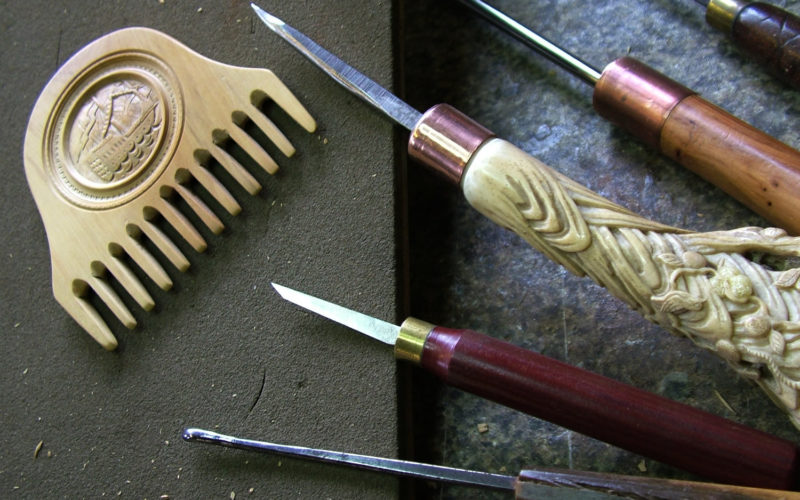
Segmented turned work has had its devotees amongst woodturners both amateur and professional since the 1930s (who remembers those two toned, brick-like biscuit barrels and fruit bowls?). In recent years some remarkable three-dimensional work has been produced, much of it pushing the boundaries of what would seem possible, some of it appearing in the pages of ‘Woodturning’. I wish to introduce you to some of the most exquisite ‘segmented’ turned work ever, and it was created with tools and equipment seen almost exclusively in museums today! I am referring to ‘Tunbridge ware’. Continue reading

Green wood inspiration: turning with wet wood

Swamp maple gobletThe ‘greenwoods’ of the Chiltern Hills have been a source of inspiration to me. I enjoy them in all seasons and all weathers, I’ve experienced the ever-changing ambiance that misty mornings or shafting sunlight can bring, and that mysterious period just after the sun has set. It’s from these greenwoods I’ve known from childhood that my raw material comes from. The Chiltern Forests are renowned for their Beech but it’s Sycamore, an interloper of recent centuries, that I use for much of my turned work. Not only is my timber from the ‘greenwood’ but I also turn it ‘green’ – working with ‘wet’ wood is both pleasurable and a challenge. Continue reading

The Chair Bodgers of Buckinghamshire

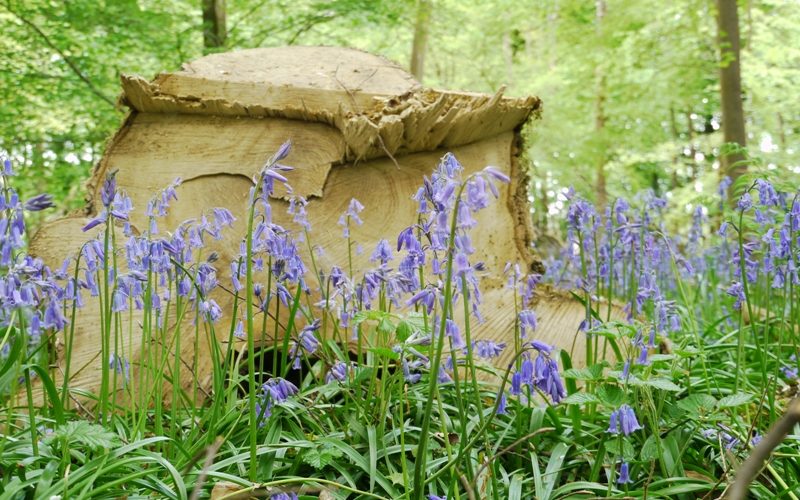
Reg Tilbury as a young manThe old chair bodgers of Buckinghamshire are now relegated to history, the last few of them doggedly clinging on to their traditional way of life until the late 1950s. I have been privileged to know some of these craftsmen from the Beech-clad Chiltern Hills and have spent many a cosy hour by their firesides and in their disused workshops sharing their old tales and dry sense of humour. They are all gone now but their legacy is every where. You are supported by their craftsmanship every time you sit in an old Windsor chair. Every leg, spindle and stretcher contains the spirit of these men, the essence of the Beechwoods is still there and if those turnings could talk they would speak of spring Bluebells, red Squirrels and autumn winds. Continue reading

Cooking up colour: Stuart King’s turned wooden pots

Ash token pot with rafia tiesVessels come in all shapes and sizes and most lathe artists try to achieve a silhouette that first and foremost appeals to the eye. A beautiful form, balance, a pretty profile, outline is just one part of the whole.

Choice of material is usually of major importance. It must of course be fit for the intended purpose whether this is to exploit an example of highly figured grain or a plain wood that will allow the viewer to concentrate upon the form alone.

Finish is another consideration and to many this will mean polish to enhance some beautiful grain and to give a smooth surface.

Continue reading

The Bucklebury Bowl Turners

George LaileyWhen things are commonplace they are often taken for granted but when the ‘everyday’ nears extinction we sit up, take notice and begin to realise the value of what has become unique. This was in some measure the story of George William Lailey (1869—1958), bowl turner of Bucklebury Common, Berkshire. Both George Lailey’s father and grand father (both named William) were bowl turners producing bowls of various sizes, plus a few platters, bread boards and handled scoops from the local Elm. Although Elm predominated occasionally other local timbers were used such as Chestnut, Sycamore and Beech. Continue reading